
Kitchen Cabinet Refacing in Wellesley, Massachusetts
If you’ve already looked at a couple of other refacing pages, you’ve probably read a lot of adjectives and not much substance. This page covers what the job actually involves in Wellesley, what your house is likely to throw at us, and what the honest options are once we’ve seen your kitchen.
What a kitchen cabinet refacing Job Involves
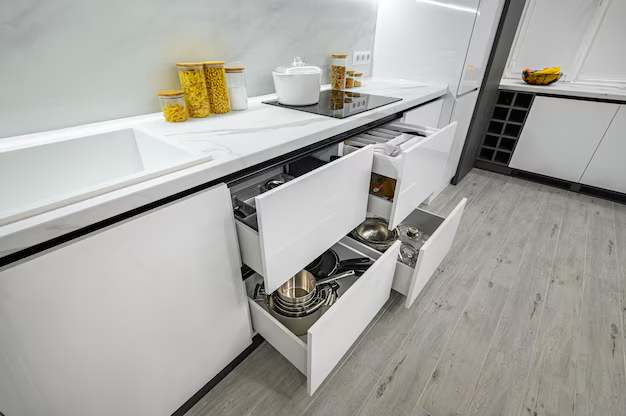
Refacing keeps your existing cabinet boxes in place and replaces everything you see and touch. That means new doors and drawer fronts built to your box dimensions, new veneer applied over every exposed box surface and end panel, new hardware, and new drawer boxes with soft-close slides where the existing boxes allow it. What it does not mean is tearing out cabinets, moving plumbing, running new electrical, or opening walls.
One carpenter and finisher handle most of the work. You’ll see your kitchen without doors for a stretch while veneer is applied and cured, and then doors go back on once they arrive from the shop. There’s no drywall dust, no demolition debris, and your appliances and plumbing fixtures stay exactly where they are.
The part people don’t expect is how much of the work happens before anyone touches your kitchen. Doors, drawer fronts, and veneer are custom-ordered to your box dimensions, and that lead time is where most of the calendar goes. The days we’re actually in your house are short by comparison.
The Wellesley housing stock and What It Means For Your Job
Wellesley’s housing splits into a few distinct eras, and which one your kitchen falls into changes what we’re actually working with. Homes built in the early 1900s through the 1930s, concentrated around the village center and the older sections near the college, are mostly Colonial Revival and Tudor Revival construction with solid wood, face-frame cabinet boxes if the kitchen hasn’t already been gutted. Those boxes are exactly what refacing is built for.
A large share of the town’s housing stock dates from the postwar building boom of the 1950s and 60s, when Wellesley filled in with Capes and colonials on subdivided lots. Original kitchens from that period are usually smaller than what a family wants today, and many were already renovated once in the 1980s or 90s. If that’s your kitchen’s history, the boxes underneath the doors may be particleboard with a thin melamine skin rather than solid wood, and that surface doesn’t hold new veneer reliably. We check this before quoting, not after we’ve started.
Newer construction and gut renovations from the 2000s onward, common in teardown-rebuild lots throughout town, typically have plywood-box cabinetry that reface well but sometimes come with door styles and hardware placements that are harder to match if you’re trying to keep half the kitchen and reface the rest.
Across all three eras, the other thing we watch for is out-of-square walls and floors, which shows up more often in the older stock. A box that’s slightly out of level from decades of settling still refaces fine, but it changes how new doors need to be scribed and hung so they close evenly. It’s a five-minute check on our end, and it’s why the in-home estimate matters more than a photo and a phone call.
Options and What We Recommend
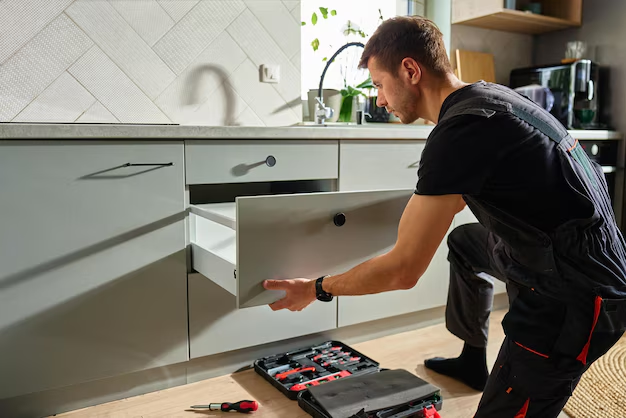
There are three real paths once we’ve looked at your kitchen, and each one trades cost against how much changes.
Refacing. New doors, drawer fronts, and veneer over your existing boxes. Lowest cost, shortest disruption, and the layout stays exactly as it is. This is what most Wellesley kitchens we see actually warrant, because most of the boxes we open up are solid wood and in sound structural shape.
Cabinet painting. A sprayed finish over your existing doors and boxes with no new veneer or doors. Cheapest option and fastest, but it only works if your current door style and hardware placement are ones you’re willing to keep. It won’t fix a dated door profile or hide damage.
Full replacement. New boxes from the studs out. This is the right call when the existing boxes are particleboard, water-damaged, or when you actually want to change the layout, add cabinet runs, or shift the island. It costs more and takes longer than refacing, and we’ll tell you plainly when your kitchen needs it instead of talking you into refacing anyway.
Materials We Use And Why
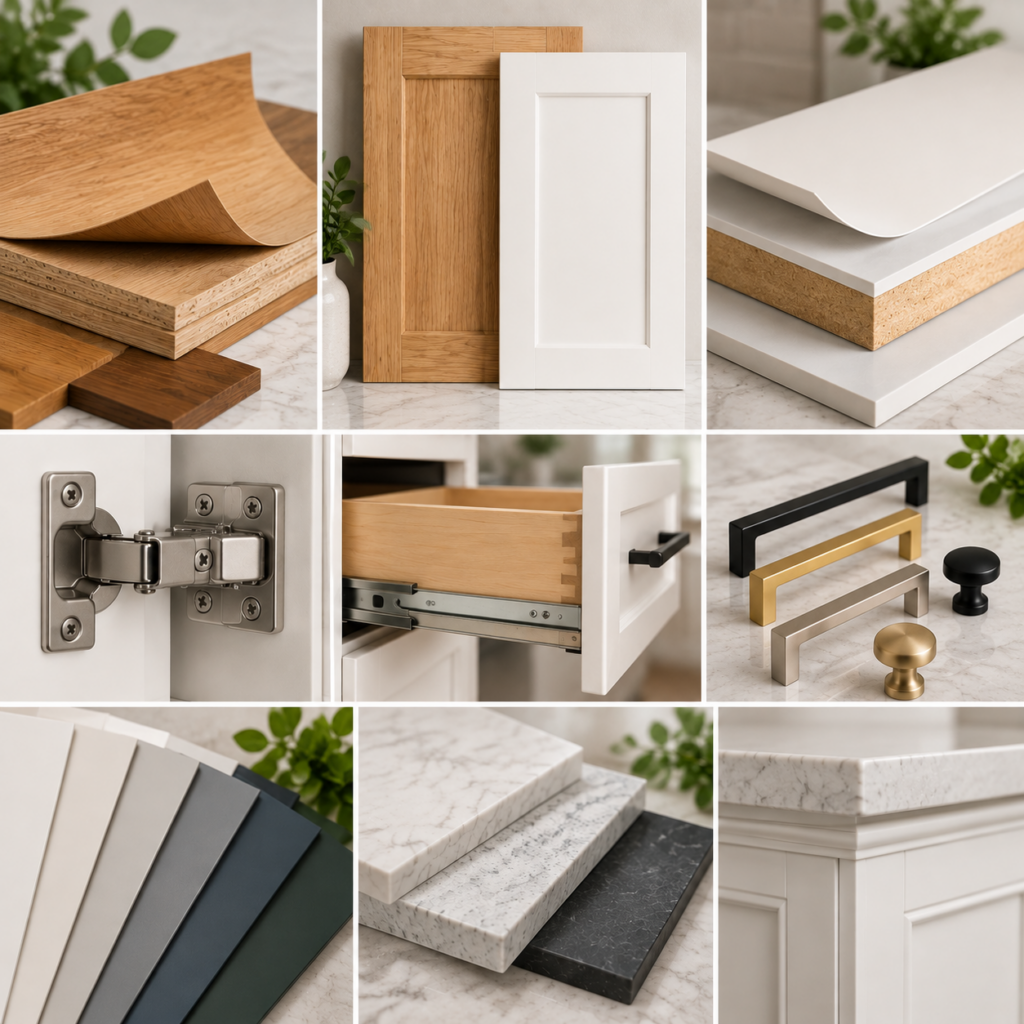
For veneer, we use real wood veneer over rigid substrate on boxes going with a stain-grade finish, since it takes stain the way solid wood does and won’t show a seam line the way thinner laminate veneers can. For paint-grade jobs, we use a rigid thermofoil or a paint-grade MDF veneer, which holds a sprayed finish more evenly than wood veneer does.
Doors and drawer fronts are solid wood face-frame construction for stain-grade jobs and MDF-core construction for paint-grade jobs, because MDF doesn’t show the wood grain telegraphing through paint the way solid wood can over time. Hardware is soft-close hinges and slides across the board, since they’re the single upgrade clients notice most in daily use and the cost difference over standard hardware is small.
Permits and inspections in Wellesley
Kitchen cabinet refacing on its own does not typically require a building permit in a Massachusetts municipality, since no structural, electrical, or plumbing work is involved. That changes if the project expands to include moving a sink, adding or relocating outlets, or altering a wall, at which point a permit is filed with the town's building department and the applicable work is inspected by the town's building or trade inspectors before it's closed out. If your project stays within refacing scope, there's nothing to file. If it grows into something that needs a permit, we handle the filing as part of the job rather than leaving it to you.
Timeline from first call to final walkthrough
We start with a free in-home estimate, where we measure your boxes, check their construction, and go over door style and finish. Once you approve the written quote, doors, drawer fronts, and veneer are ordered to your exact measurements, which usually takes four to six weeks to come back from the shop. Installation itself runs three to five working days once materials are on site, followed by a final walkthrough where we check every door and drawer before we call the job done.
What We Do Not Do
We don’t reface cabinet boxes that are water-damaged, delaminating, or structurally unsound. New veneer and doors on a failing box just hide a problem that gets worse. We recommend replacement instead and say so plainly.
We don’t take on projects that require moving plumbing, relocating gas lines, or changing the kitchen’s footprint. That’s full remodel work with a different scope and different trades involved, and we’ll tell you upfront if that’s what your project actually needs.
We don’t quote sight-unseen from photos. Box condition and squareness matter too much to the outcome to guess at them over email, so every quote follows an in-home look at your kitchen.
How We Quote
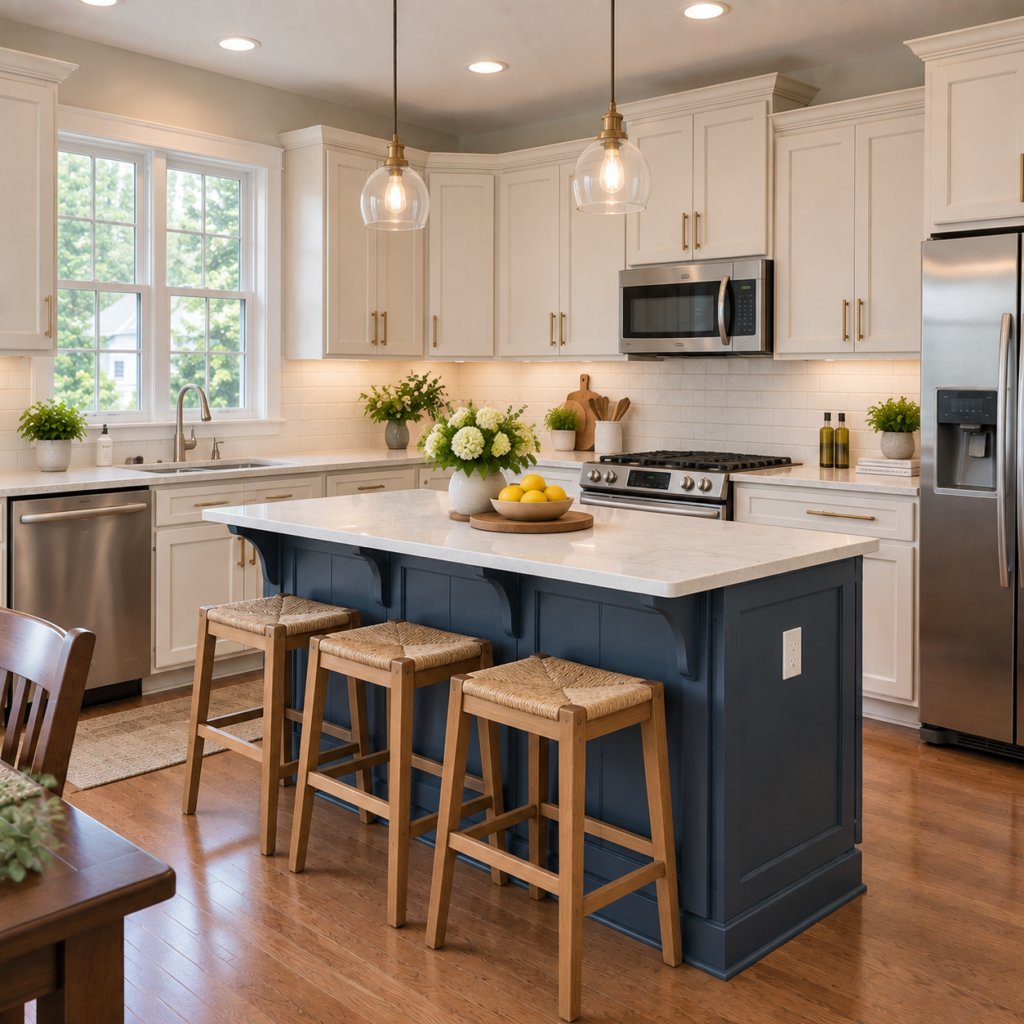
Every job gets a written quote, not a verbal number. It itemizes linear footage of cabinets measured, the door style and finish you’ve chosen, the condition of your existing boxes and any repair work that’s needed before veneer goes on, a project timeline from order to install, and a payment schedule tied to milestones rather than due in full upfront. You’ll have it in hand before you decide anything.
Frequently Asked, Answered Short
Can refacing be done in stages, kitchen half now and half later?
Not well. Veneer and finish ordered months apart rarely match exactly, so we do the full kitchen in one pass.
Will refacing work with the granite or quartz countertop I already have?
Yes, in almost every case. We build new doors and drawer fronts to your existing box dimensions, so your countertop doesn’t need to move.
Can I go from a dark wood finish to painted white cabinets?
Yes. That’s one of the most common changes we do, since it’s a full veneer and door replacement either way, not a refinish of what’s there.
My cabinet boxes have peeling laminate. Can those still be refaced?
Sometimes. Peeling laminate on a solid box can usually be prepped and refaced. Peeling on a particleboard box is often a sign the box itself is failing, which we’ll check at the estimate.
Book your estimate
Request a written quote and we’ll tell you straight whether your kitchen is a refacing job, a painting job, or a replacement job, with real numbers before we leave. Call 857-837-2572, check the cost page for typical ranges, see how the process runs on the process page, or reach us through the contact page.